

Fall
Outdoor Fire Pit Safety
While gathering around an outdoor fire pit is a relaxing way to spend a summer or fall evening, it is important to remember that embers blowing from a backyard fire pose the same threat to your home as if they are from a wildfire. In 2021, an estimated 6,200 injuries related to fire pits or outdoor heaters sent people to emergency rooms, according to the Consumer Products Safety Commission.
So, before you start roasting those marshmallows, here are some safety practices to help you avoid danger and damage from your outdoor fire pit:
- Fire pits, chimneys and outdoor fireplaces should be placed at least 10 feet away from your home or anything that can burn.
- Don’t set up fire pits under string lights, power lines or low hanging branches.
- Place your fire pit on a stable, even fire-resistant surface; use a fire-proof base for your unit, especially on a wood deck.
- DO NOT leave a fire unattended. Watch children and pets closely when using the fire pit, they may be less cautious than adults near a fire.
- Never use lighter fluid, gasoline or kerosene in a fire pit.
- Make sure everyone sits a safe distance from the fire.
- With wood burning fires, use a metal screen cover to keep sparks contained and consider how different types of wood burn, how quickly they ignite and how long they stay lit.
- Don’t burn wood-based construction materials (such as pressure-treated woods or plywood). They may contain chemicals that create toxic smoke.
- Put out wood and charcoal fires or turn off propane and natural gas fires all the way before you leave the backyard. Keep a fire extinguisher, bucket of water or water hose readily available.
Did you know...in the Village of Hanover Park, "it is unlawful to burn anywhere in the Village any garbage, refuse, landscape waste or lumber that is not clean, and all fires in an outdoor fireplace are prohibited during the hours of midnight and 6:00 a.m."
For additional rules and restrictions, refer to the Hanover Park Municipal Codes, Section 66-19.
Carbon Monoxide (CO) Poisoning Prevention
As the days and nights become colder, residents begin turning on their heating systems causing the risk of carbon monoxide (CO) poisoning to increase. Thankfully, CO poisoning is entirely preventable. Learn how to protect yourself and your family by recognizing the symptoms of CO poisoning and how to prevent it.
Carbon monoxide is called the "invisible killer" because it is a colorless, odorless, poisonous gas. It is undetectable to the human senses, so people may not know they are being exposed. CO is found in fumes produced by furnaces, kerosene heaters, vehicles "warmed up" in garages, stoves, lanterns, gas ranges, portable generators, or by burning charcoal and wood. When the gas builds up in enclosed spaces, people and animals who breathe it can be poisoned. Ventilation does not guarantee safety.
The most common symptoms of CO poisoning are headache, dizziness, weakness, nausea, vomiting, chest pain, shortness of breath and confusion. Mild symptoms are sometimes mistaken for the flu. If you think you are experiencing ANY of the symptoms of carbon monoxide poisoning, go outside and get fresh air immediately and call 911.
One of the best ways to prevent CO poisoning is to install battery-operated or battery back-up carbon monoxide detectors in the hallway near sleeping areas in the home. The batteries should be replaced when you change the time on your clocks, every spring and fall. Detectors should also be replaced every five years. Ten (10) year sealed-in lithium battery CO detectors are now available. There is no need to replace the battery - you simply replace the entire unit every 10 years.
The following are tips for CO safety from the Centers for Disease Control and Prevention (CDC):
- Check or change the batteries in your CO detector every six months. If you don't have a battery-powered or battery back-up CO detector, buy one soon.
- Have your heating system, water heater and any other gas, oil or coal burning appliances serviced by a qualified technician each year.
- Keep vents and flues free of debris.
- Never leave the motor running in a vehicle parked in an enclosed or partially enclosed space, such as a garage.
- Never run a motor vehicle, generator, pressure washer, or any gasoline-powered engine less than 20 feet from an open window, door, or vent where exhaust can vent into an enclosed area.
- Never use a charcoal grill, hibachi, lantern or portable camping stove inside a home, tent or camper.
- Never run a generator, pressure washer, or any gasoline-powered engine inside a basement, garage, or other enclosed structure, even if the doors and windows are open.
- If you suspect CO poisoning, call 911 right away.
For more information, visit the CDC's Carbon Monoxide Poisoning website.
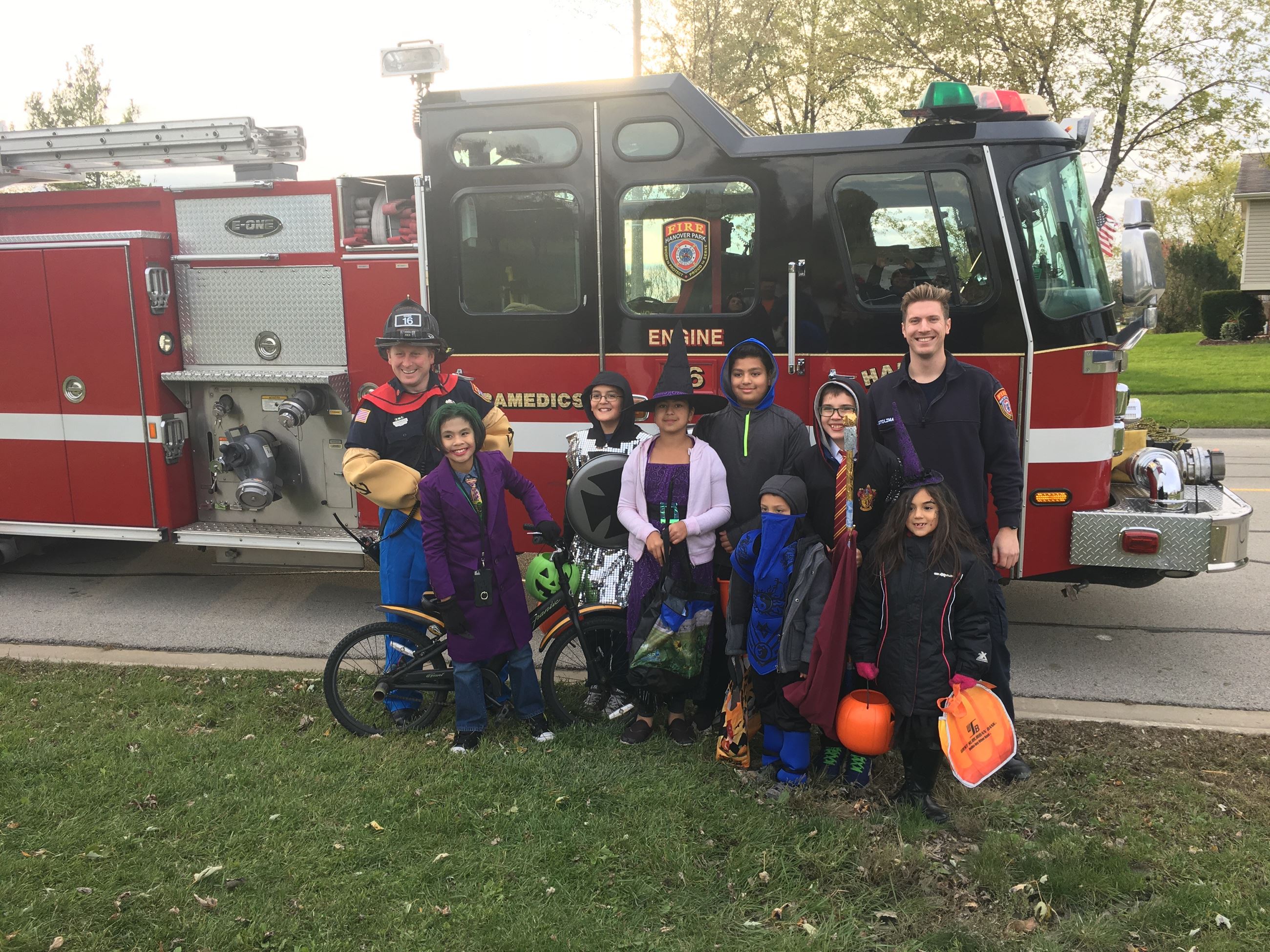 How to Make Halloween Safe for Everyone
Kids (and adults) love the magic of Halloween, but traffic, costume and fire safety are essential for trick-or-treaters. Here are a few tips to help make Halloween a safe and happy holiday for everyone.
Traffic Safety
When possible, trick or treat while it is still light outside. Provide children with flashlights or glow sticks to carry for lighting, and trick or treat on well-lighted streets. Walking on the sidewalk and not in the street is best. If there is no sidewalk, walk facing traffic as far off the road as possible. Never dart out between parked cars in the middle of the block. A responsible adult should accompany young children on the neighborhood rounds. If older children are going alone, plan and review a route acceptable to you and agree on a specific time they should return home.
Costume Safety
When choosing a costume for children, stay away from long trailing fabric. If your child is wearing a mask, make sure the eye holes are large enough so they can see out. Even better - wear makeup instead of a mask. If you must go out after dark, it is best for children to wear light-colored costumes so they can be easily seen. Trim costumes with special reflective tape that shines brightly in headlights.
Fire Safety
Did you know...
Decorations are the first things to ignite in roughly 800 reported home fires each year. More than one-third of these were started by a candle. Dried flowers, cornstalks and crepe paper catch fire easily. Keep all decorations away from open flames and other heat sources like light bulbs and heaters. Use a battery-operated candle or glow-stick in jack-o-lanterns. If you use a real candle, use extreme caution. Make sure children are watched at all times when candles are lit. When lighting candles inside jack-o-lanterns, use long, fireplace-style matches or a utility lighter. Be sure to place lit pumpkins well away from anything that can burn and far enough out of the way of trick-or-treaters, doorsteps, walkways and yards.
Make sure all smoke alarms in the home are working and remember to keep exits clear of decorations so nothing blocks escape routes. And teach children to stay away from open flames including jack-o-lanterns with candles in them.
And most importantly, be on the lookout for the Hanover Park Fire Department handing out treats in your neighborhood on Halloween!!